


Hair Loss in Women: What's Behind the Shedding (and Which Labs Are Worth a Look)
It shows up slowly, then all at once. More hair in the brush. More in the shower drain. A ponytail that wraps one extra time. A part that looks a little wider in photos than it used to.
Hair shedding carries an emotional weight that a symptom chart doesn't capture — it's tied up with identity, femininity, and the unsettling feeling that your body is changing without asking you. So let's do this page properly: what's actually happening when women shed, the contributors that are genuinely checkable, what labs can and can't tell you, and when hair loss needs a clinician's eyes in person. No miracle serums. No promises. Just the map.

I'm Nicole, a registered nurse. Education only: this page doesn't diagnose anything and doesn't replace your clinician or dermatologist. It helps you walk in with better questions.
The thing almost nobody explains: hair runs on a delay
Hair grows in cycles — a long growth phase, then a resting phase, then the hair sheds. At any moment, a fraction of your hair is scheduled to shed; that's normal (roughly 50–100 hairs a day is the commonly cited range).
The important part: when something stresses the system — an illness, a major stressor, childbirth, a significant weight change, a deficiency that's been building — follicles can shift into the resting phase together. The shedding then shows up two to three months after the trigger, not the week it happened. Which means the question is rarely "what did I do this month?" It's "what was happening two or three months ago?" That single reframe explains a lot of "sudden" hair loss.
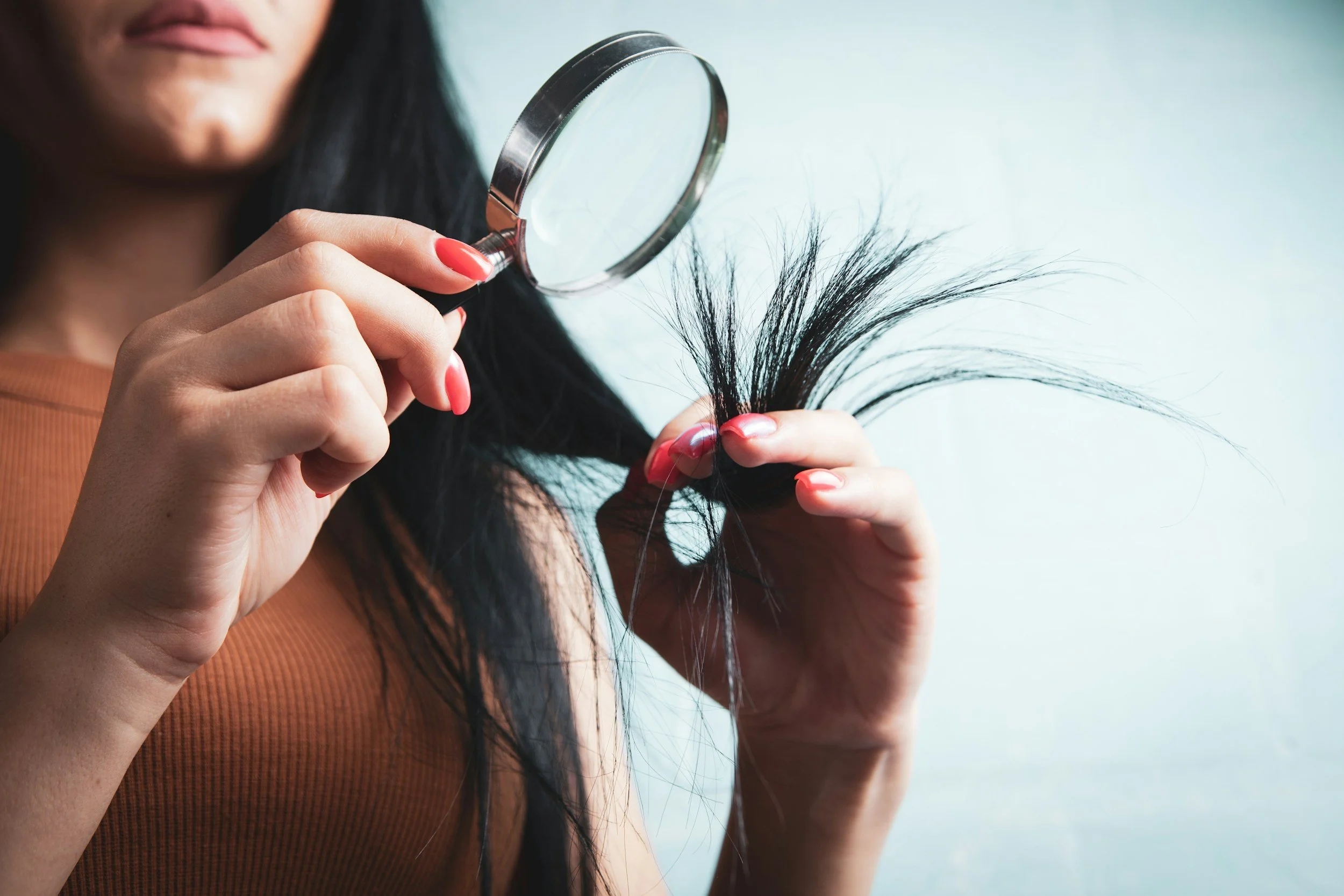
The contributors worth knowing
Iron and ferritin. Ferritin — your iron storage marker — is one of the most discussed lab links to shedding, particularly in women who menstruate, who've had children, or whose intake runs low. Here's the trap: a standard panel can show hemoglobin in range while ferritin quietly sits at the bottom of its (wide) range. "Not anemic" and "iron stores are where hair would like them" are not the same statement. Our Ferritin & Iron Studies Explained page walks through exactly how to read that marker.
Thyroid. Both underactive and overactive thyroid patterns are associated with diffuse shedding and changes in hair texture — the thyroid helps set the pace for growth cycles all over the body. And a TSH alone doesn't always tell the whole story; Thyroid Labs Explained covers the fuller panel and what each marker reflects.

Postpartum shifts. After delivery, hormone levels drop and the hair that pregnancy kept in the growth phase sheds over the following months. It's common, it's usually temporary, and it's still miserable while it's happening. If shedding continues long past the first year, or pairs with fatigue and other symptoms, it's worth checking the ferritin and thyroid pieces above rather than just waiting it out.
Stress, illness, and major body changes. Fevers, surgeries, hard seasons, crash dieting, and rapid weight loss in any direction can all trigger the delayed group-shed described above (clinicians call this pattern telogen effluvium). The encouraging part: when the trigger resolves, this type of shedding typically slows on its own over the following months. The harder part: it asks for patience nobody enjoys.
Hormone changes across the 40s. In perimenopause, shifting estrogen and the relative influence of androgens can contribute to gradual thinning — often a widening part or thinning at the crown rather than dramatic shedding. This pattern is slower, and it's where a clinician's (often a dermatologist's) in-person look matters most, because management depends on the pattern, not just the labs.
Other nutrients. Vitamin D and B12 are often part of the conversation; both are checkable, and both show up constantly in women who are also fatigued — which is why our fatigue guide, Why Am I So Tired All the Time?, treats hair changes as one clue in a bigger map rather than a standalone problem.
The non-lab causes. Tight hairstyles worn constantly, harsh chemical processing, certain medications, and scalp conditions can all drive loss on their own. Labs can't see those — a honest history can.
What labs can — and can't — tell you
Labs can check the checkable: ferritin and iron studies, thyroid markers, vitamin D, B12. That's a genuinely useful short list, and for many women it's where an answer (or a door closing) lives.
Labs can't tell you the pattern of your loss, examine your scalp, or promise regrowth timelines. Hair recovery, when it comes, is measured in months — follicles need to re-enter the growth phase and the new hair needs length. Any product or program promising visible regrowth in weeks is selling hope, not biology. What looking at the data buys you is knowing which contributor you're actually dealing with, instead of buying products for all of them.
Questions worth bringing to your next appointment
"Does my shedding pattern look like a trigger-based shed, gradual thinning, or something else?"
"Should ferritin be checked — and can we look at the actual number, not just whether it's in range?"
"Is a fuller thyroid panel warranted alongside the TSH?"
"Thinking back two to three months — does a trigger fit my timeline?"
"At what point would you refer me to dermatology?"
When to seek care promptly
See a clinician — dermatology is often the right door — without waiting if you notice: patchy or bald spots, scalp redness, scaling, pain, or itching that's more than mild, rapid or dramatic loss, loss of eyebrows or eyelashes, shedding paired with significant fatigue, weight change, or feeling unwell, or any loss that is new, worsening, and unexplained past a few months. Hair changes can occasionally be the visible tip of something systemic; they deserve the same respect as any other persistent change.
If you're not sure which thread to pull first
Shedding almost never travels alone — it arrives with fatigue, cycle changes, or a season that took a lot out of you. The free Wellness Check takes three minutes and helps sort your symptoms into a focus area, so the first test you consider is the one that matches your pattern. For many women reading this page, that route surfaces ferritin and thyroid first — the two most checkable contributors — and you can explore from there.
Your one clear next step: take the free Wellness Check.
Imagine understanding your own pattern
Picture this: instead of standing in the hair-care aisle buying hope in a bottle, you know your numbers. You know whether your ferritin is playing a role, whether your thyroid is part of the story, and which season of shedding you're actually in — with a realistic timeline instead of a vague dread.
That's what a second look at your labs is for. Less guessing. More answers.
Educational information only — not medical advice, diagnosis, or treatment. Nurses Know Life provides education and results review to help you understand your labs and prepare better questions for your own clinician.